

What Kids Hear vs. What an X-Ray Really Is
When adults say the word X-ray, we think:
picture, doctor, bones, answers.
When kids hear X-ray, they often think:
big machine, loud room, strangers, something scary.
And that gap—between what kids hear and what an X-ray really is—is where fear grows.
The good news?
You don’t need medical words, long explanations, or perfect timing to help a child feel safe.
You just need the right language.
This guide will help parents, teachers, and librarians understand:
- What kids imagine when they hear “X-ray”
- Why those ideas make sense
- How to gently replace fear with clarity
- How stories—especially familiar ones—make medical moments easier
What Kids Think an X-Ray Is
Young children don’t have context yet.
They build meaning from tone, facial expressions, and bits of adult conversation.
So when a child hears:
- “You need an X-ray”
- “Hold still”
- “The technician will be right back”
- “Don’t worry”
Their brain fills in the blanks.
Common things kids imagine:
- A machine that moves toward them
- A test that goes inside their body
- A stranger they don’t know touching them
- A room where they have no control
To a 4-year-old, unknown = unsafe.
They are not afraid of science.
They are afraid of surprises.
What an X-Ray Really Is (In Kid Language)
An X-ray is:
- A special camera
- That takes pictures of bones
- While the child stays very still
- And nothing goes inside their body
That’s it.
No needles.
No pain.
No surprises.
The challenge isn’t the X-ray itself—it’s how differently adults and kids experience the moment.
What Kids Hear vs. What Adults Mean
| What Adults Say | What Kids Often Hear |
|---|---|
| “It’s just an X-ray.” | “It’s something big I don’t understand.” |
| “Don’t be scared.” | “There is something to be scared of.” |
| “It won’t take long.” | “I don’t know what will happen first.” |
| “The technologist will help you.” | “A stranger will touch me.” |
Kids are excellent listeners—but not great translators.
That’s why clear, gentle words matter.
What to Say to Your Child (Simple Scripts)
If you’re a parent:
You can say this before the appointment or right before the test.
“We’re going to take a picture of your bones with a special camera.
The camera stays on the outside of your body.
You’ll lie very still, like a statue, and then we’re done.”
Or:
“The room has a big camera that takes pictures.
I’ll be right nearby, and nothing will hurt your body.”
Short. Calm. Honest.
If you’re a teacher or librarian:
Use group-friendly language.
“Sometimes doctors use special cameras to look at bones.
The camera doesn’t touch your skin, and it doesn’t go inside your body.
A helper makes sure kids feel safe while pictures are taken.”
This works well for:
- Storytime
- STEM weeks
- Community helper lessons
What Not to Say (And Why)
Avoid phrases like:
- “Don’t be scared.”
- “It’s nothing.”
- “You’ll be fine.”
These words come from love—but they can confuse kids.
Children feel fear in their bodies.
When adults dismiss it, kids may feel unheard.
Instead, try:
“It’s okay to feel nervous. I’ll tell you what happens next.”
Clarity builds confidence.
Why X-Ray Rooms Can Feel Big to Little Kids
Even kid-friendly imaging rooms can feel overwhelming.
- The room is often quiet
- The machine is larger than them
- The adults wear uniforms
- The child is asked to hold still
That’s a lot for a small nervous system.
Seeing the room ahead of time—or seeing pictures of rooms like it—can help kids feel prepared.
What a Kid-Friendly X-Ray Room Looks Like
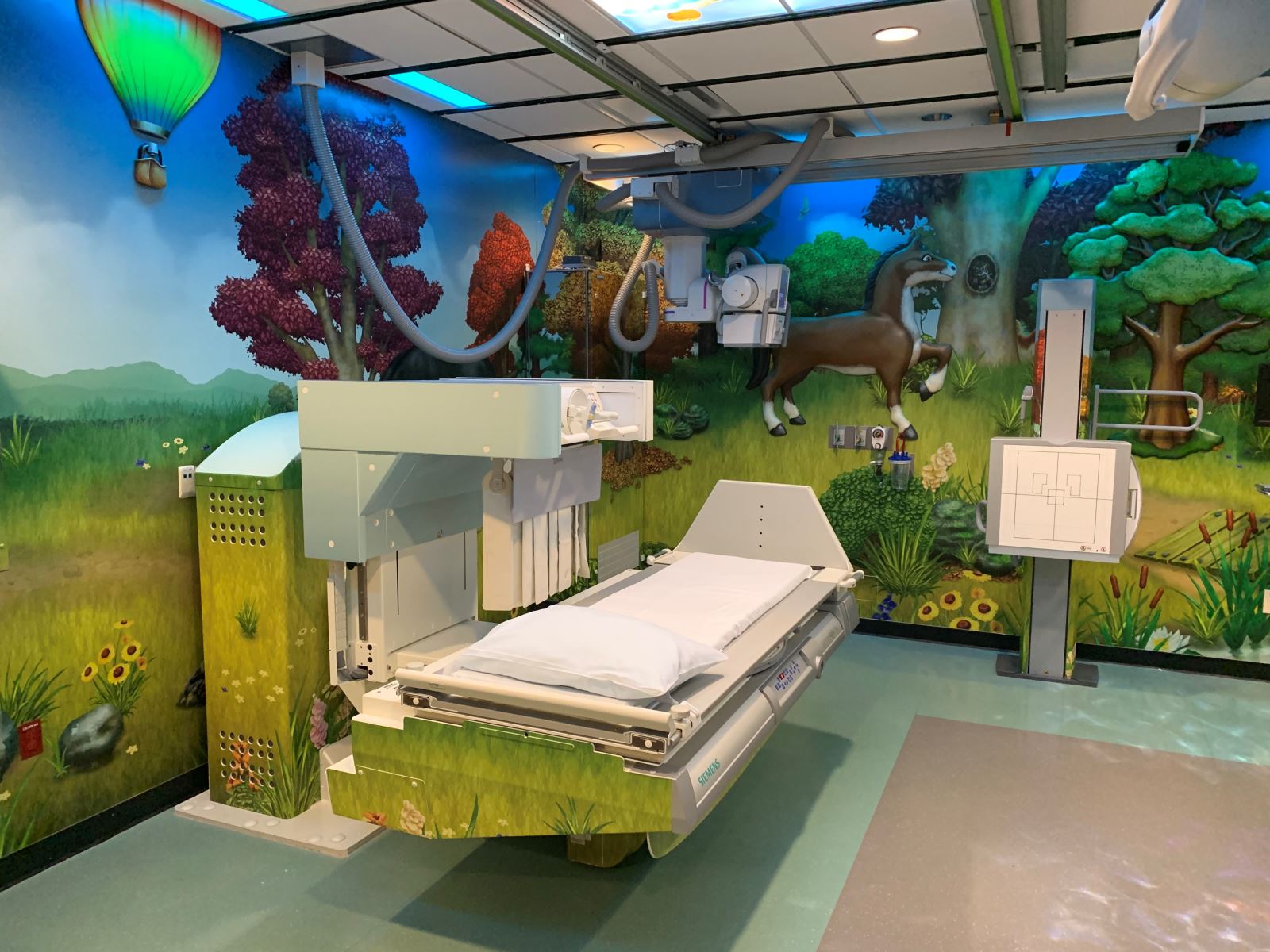
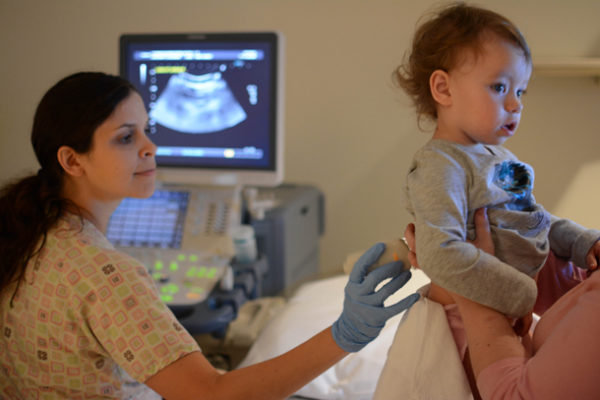
Image credit: Stock photography commonly used for patient education and pediatric imaging awareness.
When kids see images like this before an appointment, the room feels familiar instead of surprising.
Why Stories Help Kids Feel Safe
Children learn best through repetition and characters they trust.
A story:
- Slows the moment down
- Gives kids language before they need it
- Helps them picture what will happen
That’s why reading before an appointment matters more than explaining during one.
How Rachel the Radiographer Helps Kids Understand X-Rays
This is where stories truly shine.
In Rachel the Radiographer, kids meet:
- A friendly radiology professional
- A calm guide inside a hospital setting
- A character who explains things clearly and kindly
Rachel doesn’t rush kids.
She doesn’t talk over them.
She shows them that medical spaces can feel safe.
For parents, the book becomes:
- A conversation starter
- A bedtime read before appointments
- A familiar voice kids remember in real life
For teachers and librarians, it supports:
- Early STEM exposure
- Career awareness
- Community helper lessons
The story bridges the gap between what kids hear and what an X-ray really is.
For Parents: Read Before, Not During
The best time to talk about an X-ray is:
- The night before
- A calm moment earlier in the day
- Storytime, not waiting-room time
Kids process better when they aren’t already overwhelmed.
For Educators: A Gentle STEM Entry Point
X-rays are an excellent introduction to:
- Medical careers
- Technology helping people
- Science in everyday life
You don’t need details—just reassurance and curiosity.
Common Parent Questions
Do X-rays hurt kids?
No. X-rays do not cause pain.
Does anything go inside their body?
No. The camera stays outside the body.
Why does my child need to hold still?
Stillness helps the camera take a clear picture—just like when taking photos.
Can I stay with my child?
In most cases, yes. Parents are often nearby.
A Gentle Reminder for Adults
Kids don’t need perfect explanations.
They need honest ones.
When we slow down, choose simple words, and offer familiar stories, medical moments feel less scary—and more manageable.
Ready to Help a Child Feel Calm About X-Rays?
If you want a story that explains medical imaging in a warm, kid-friendly way,
Rachel the Radiographer was created for moments just like this.
→ Buy the book
→ Share this post with a teacher or librarian
→ Save it for your next appointment